Executive Order 14420: routine childhood vaccines cut to 11 diseases, MMR to be split
Why it matters
This is the first time a President, rather than an advisory committee, has set the shape of the childhood vaccine schedule by executive action. Whatever the courts decide about the ACIP votes, the order itself is now part of the permanent record and worth reading in full.
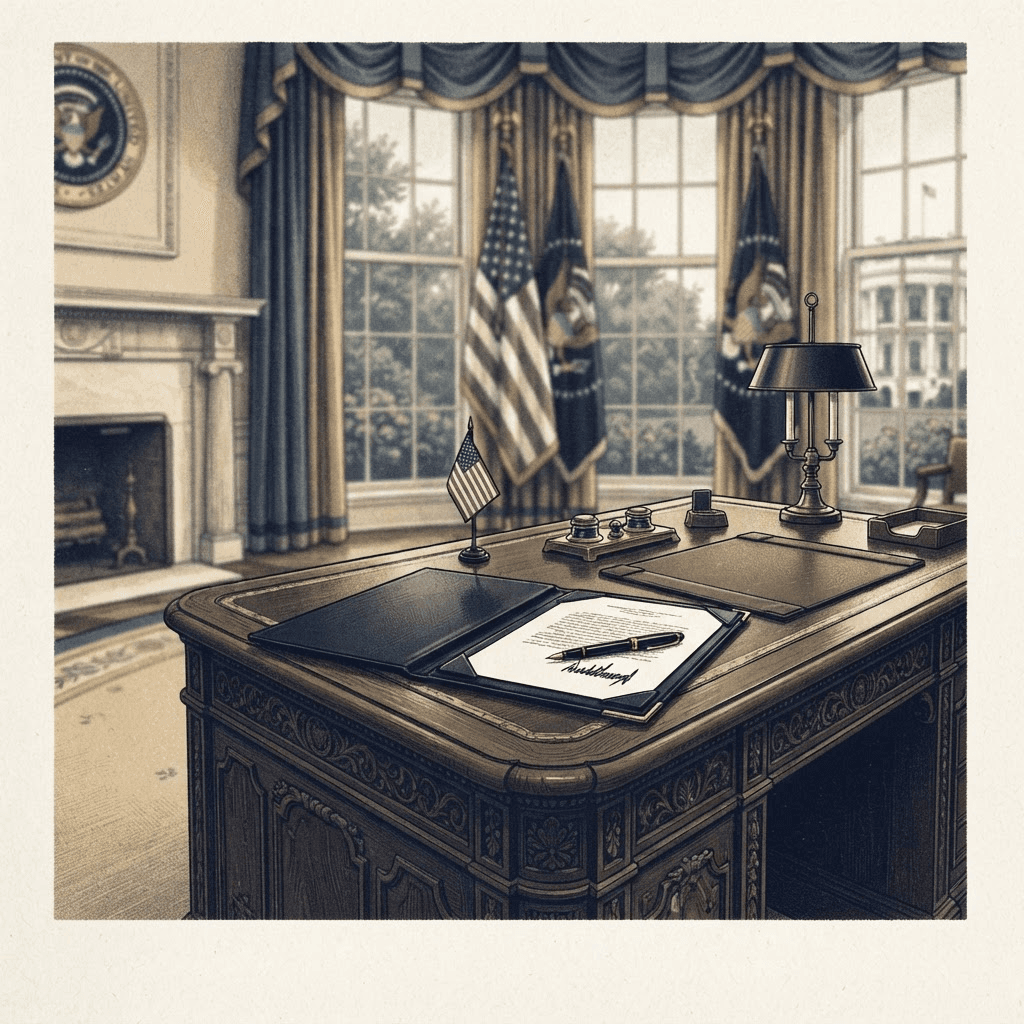
Executive Order 14420, signed August 10, 2026 and titled “Delivering Gold Standard Childhood Vaccine Recommendations for Americans,” does three concrete things. It limits routine childhood immunization recommendations to 11 diseases, down from 18. It directs the Department of Health and Human Services to develop plans to offer the MMR vaccine as three separate single-disease shots once domestic supply exists. And it encourages administering childhood immunizations at separate medical visits to the maximum extent feasible.
The order builds on the schedule overhaul HHS announced in January 2026, which a federal district court stayed in March. By moving the policy into an executive order, the administration created a directive that does not depend on the contested ACIP votes, though it still requires HHS rulemaking and still faces the same litigation from the American Academy of Pediatrics.
Supporters describe the order as the fulfillment of a campaign promise to reexamine the schedule. Critics, including most major medical associations, say it substitutes political judgment for the advisory process that has set the schedule since 1964. Both readings are here; the order text is linked below.
Related coverage

New McCullough Foundation study: COVID-vaccinated children show higher odds of autism and ADHD in federal survey data
This is the McCullough Foundation’s newest paper, posted today, and it uses the federal government’s own National Health Interview Survey rather than a private dataset. That makes it easy for anyone, including HHS, to check. It is a preprint and has not been peer-reviewed yet.

NIH finalizes its $51 million autism research initiative: 13 projects, none on vaccines
The administration promised a hard look at what causes autism. The money is now committed, and it is worth being precise about where it went: the largest federal award pool of the year funds thirteen projects, and not one of them studies vaccines. The vaccine question sits with a separate, much smaller contract that has yet to report anything.
Kennedy tells Children's Health Defense conference the government is finally asking the vaccine-safety questions
A sitting HHS Secretary telling a movement conference that his agency is investigating vaccine-autism links is itself the story, a reversal of decades of federal posture, stated in his own words.